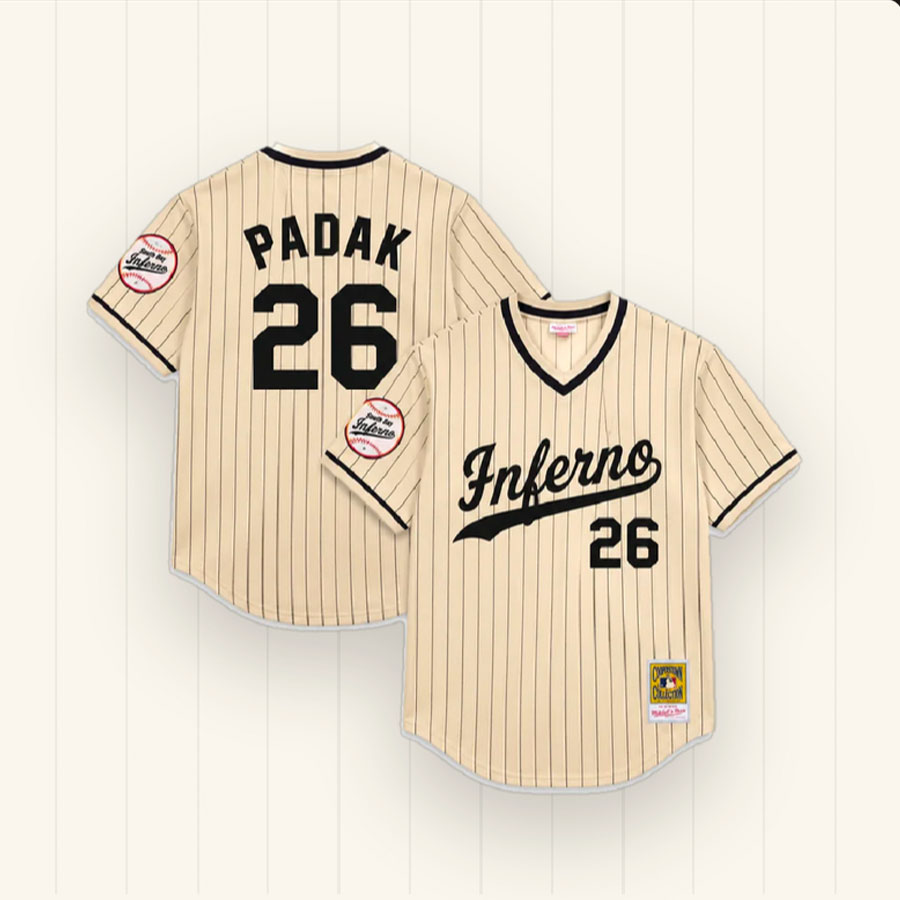
Inspired by Detroit Tigers home, Ty Cobb era (c. 1912–1917)
Bone pinstripe with a black cadet collar, cut from the Deadball template Detroit wore at the brand-new Navin Field. Chain-stitch script and felt No. 26 front and back.
Nineteen jerseys, four decades, one club. Each design is an homage to a landmark uniform in baseball history — rebuilt in period-correct fabrics with cut-felt crests and layered tackle-twill lettering. Nothing here is printed.
Lookbook · Vol. 1Every piece is an original design, but the construction and silhouette trace directly to the era that inspired it. We build them the way they were built the first time — to last a season of slides, not a wash cycle.
Wordmarks and numbers cut from heavyweight twill, layered for outline colors, and zig-zag stitched to the body.
Deadball-era pieces use cut-felt crests and chain-stitched scripts, matched to period construction.
Flannel-hand knits for the 1910s, ponte mesh for the '80s pullovers, washed pinstripe bodies for the throwbacks.
Every jersey is finished with a woven or leather-look South Bay Inferno tag stitched at the front hem.
Heavyweight flannels, cadet collars, felt crests and soutache trim — the boxy, buttoned look of baseball's first golden age, when a uniform was built to survive a full season of dirt.

Inspired by Detroit Tigers home, Ty Cobb era (c. 1912–1917)
Bone pinstripe with a black cadet collar, cut from the Deadball template Detroit wore at the brand-new Navin Field. Chain-stitch script and felt No. 26 front and back.

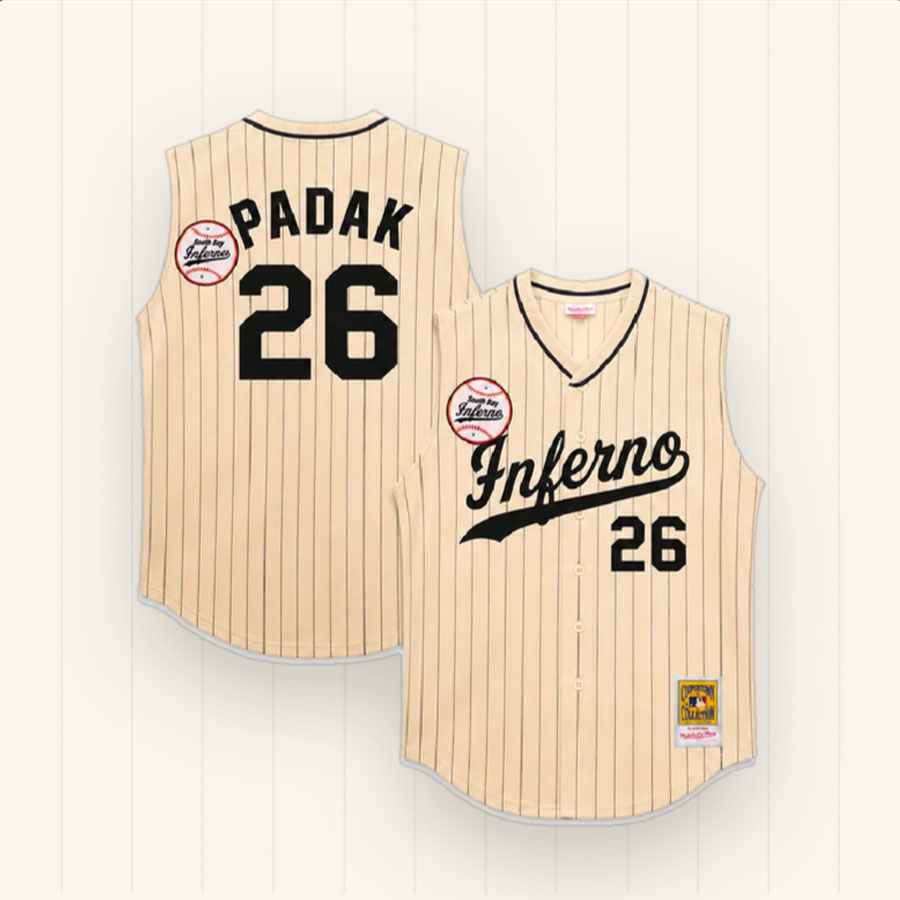
Inspired by Detroit Tigers home, sleeveless variant (1910s)
The cadet pinstripe taken sleeveless, the way clubs cut them down for July doubleheaders. Same felt script and numbers, built to layer over a henley.

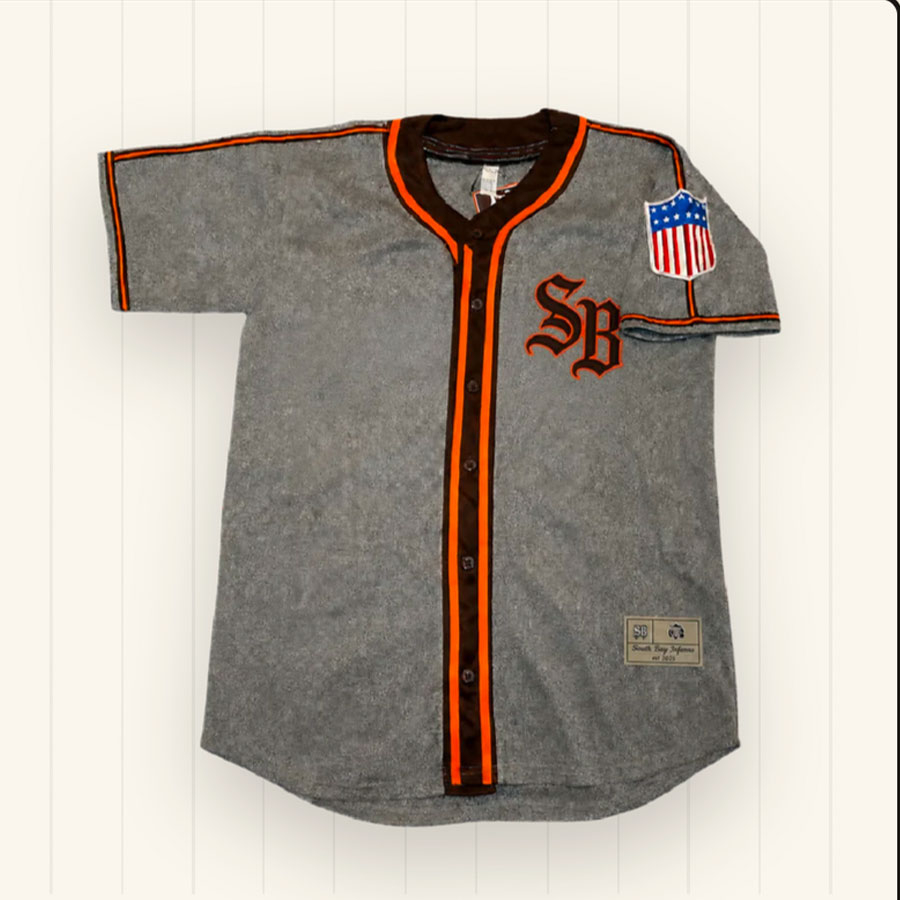
Inspired by St. Louis Browns road, WWI patriotic set (1917)
Heather road gray with brown-and-orange soutache down the placket, an Old-English crest, and the stars-and-stripes shield teams added to their sleeves when America entered the war in 1917.

Inspired by Chicago White Sox home, 1919 World Series
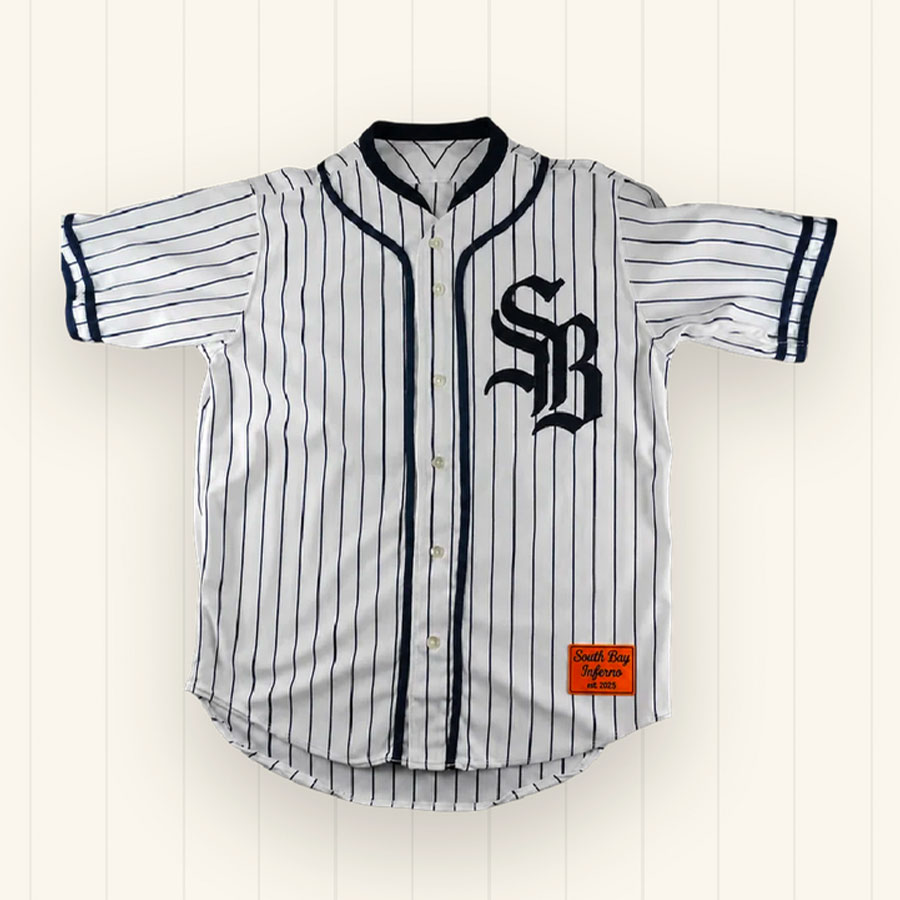
Full-button collar with navy piping traced down the placket and an Old-English crest at the chest — the pinstriped home flannel of the infamous 1919 club, finished with a leather jock tag.

Inspired by Chicago White Sox road, 1919 World Series
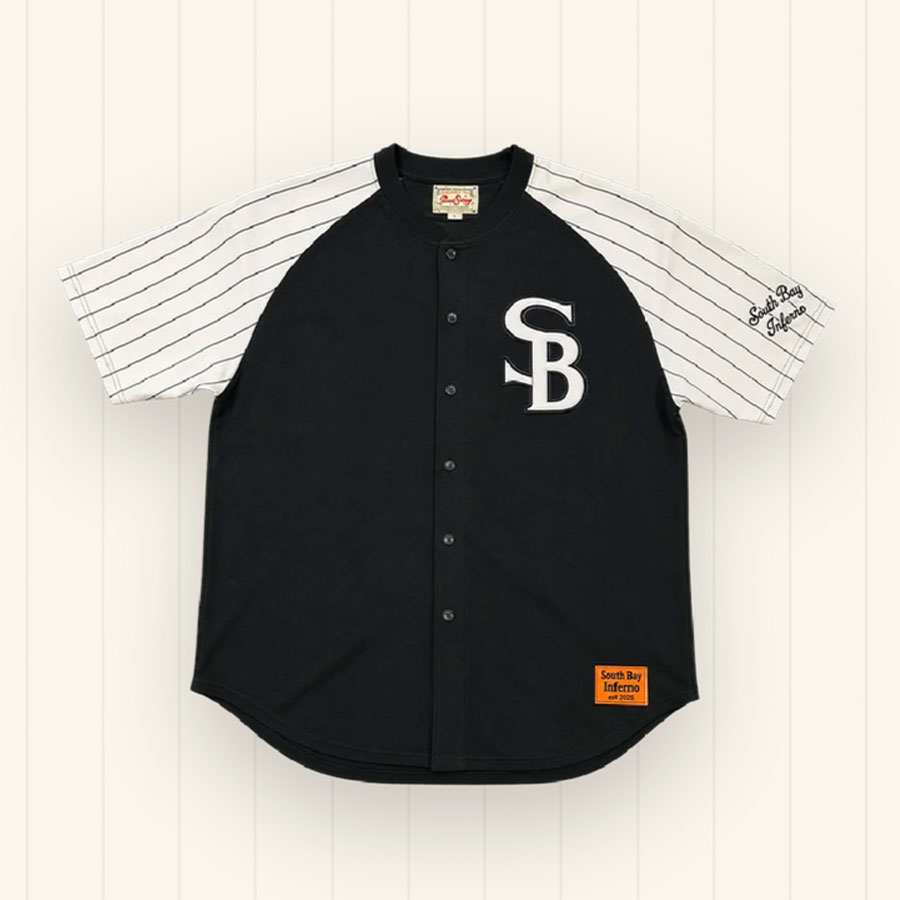
Ink body with pinstriped raglan sleeves, the two-tone road cut of the era. Embroidered script at the sleeve, appliqué crest at the chest.
Polyester, pullovers, and colors baseball had never dared before. When double-knit arrived, clubs on the coasts turned the diamond into a paint box — and these five are the loudest of them all.

Inspired by Houston Astros 'rainbow', debut 1975
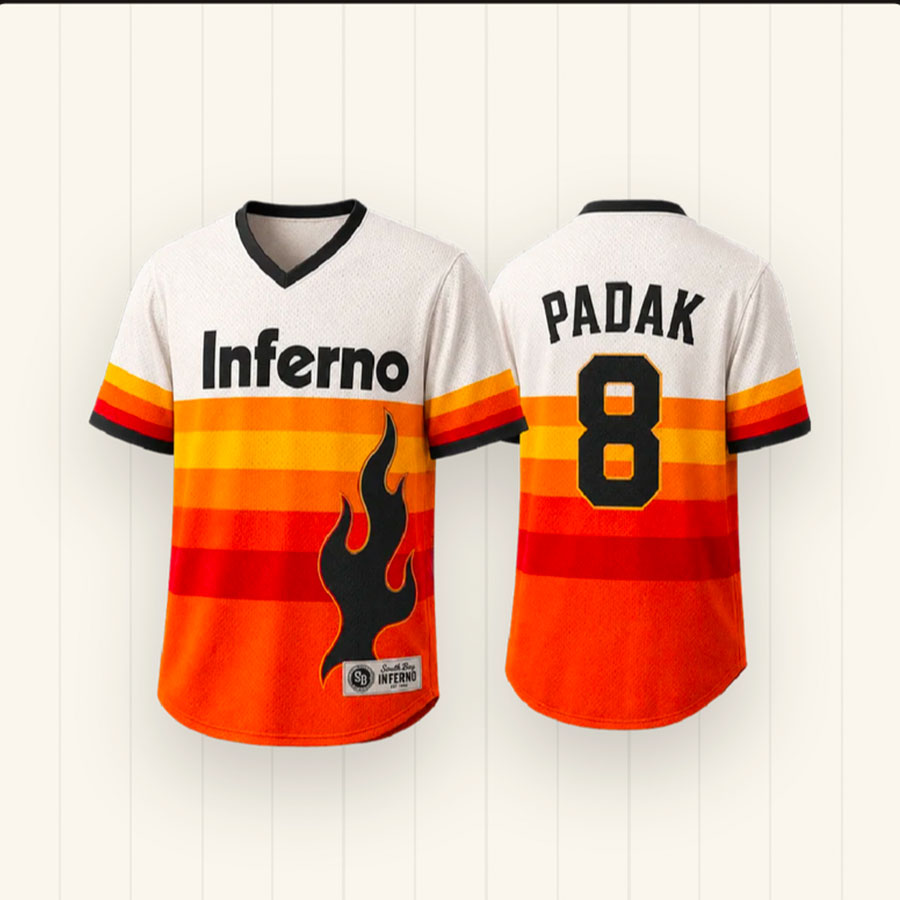
The most radical redesign in big-league history — cream shoulders falling through gold, orange and red bands, first worn in 1975. We swap the star for a black felt flame at the hip and a stitched crest at the tail.

Inspired by Pittsburgh Pirates 'We Are Family', 1979
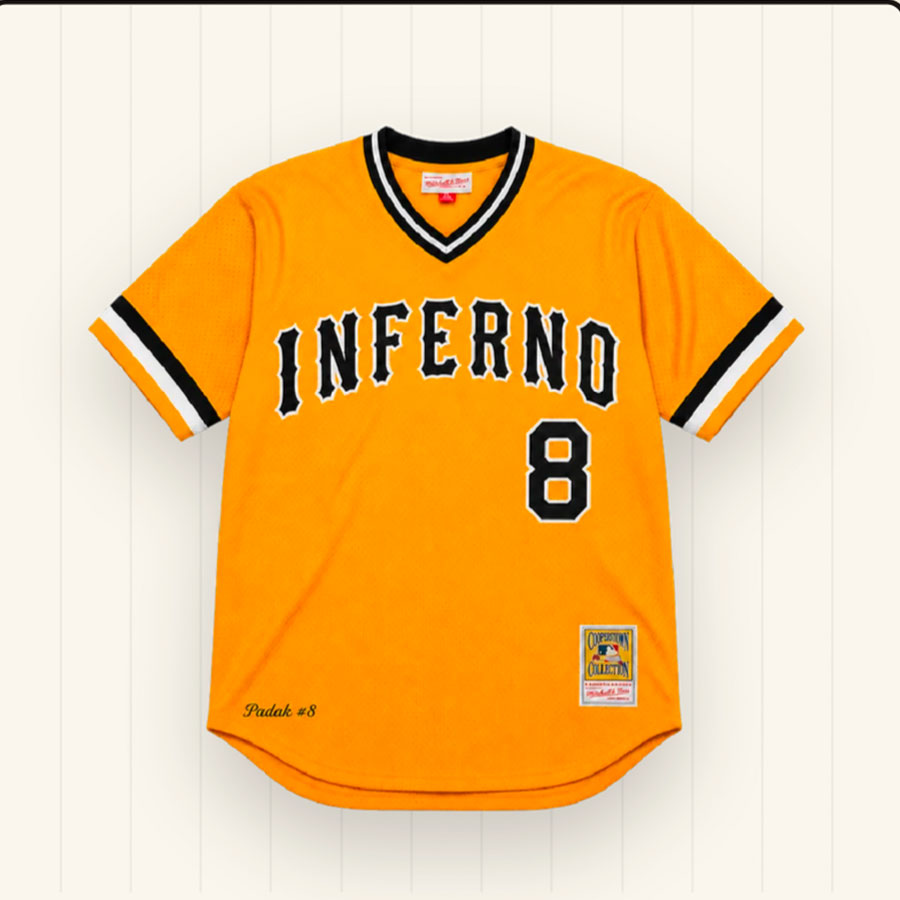
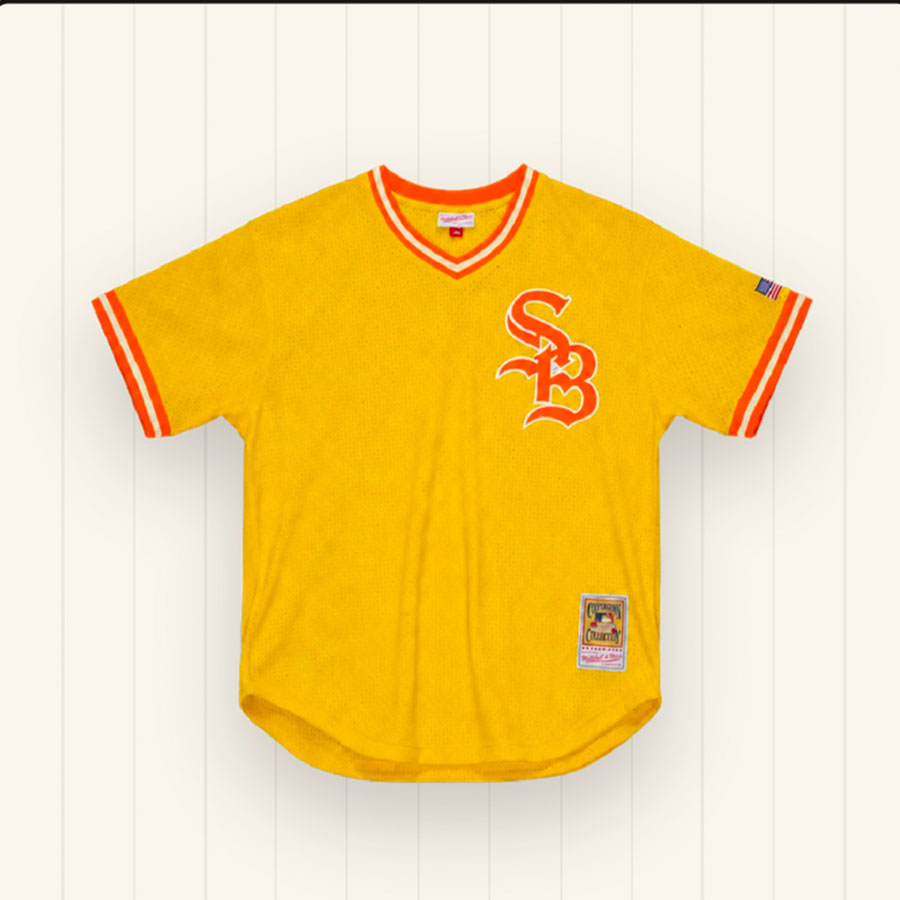
Marigold mesh pullover with black-and-white striped trim, straight off the '79 champs who mixed and matched gold and black all season. Arched wordmark and No. 8 in double-layer tackle twill.

Inspired by Oakland Athletics green-and-gold, early 1970s
Head-to-toe Tulane gold with a two-tone crest and a flag sleeve — Charlie Finley's cutting-edge look from the three-peat A's. Bright enough to read from the last row.

Inspired by San Diego Padres home, Winfield era (mid-1970s)
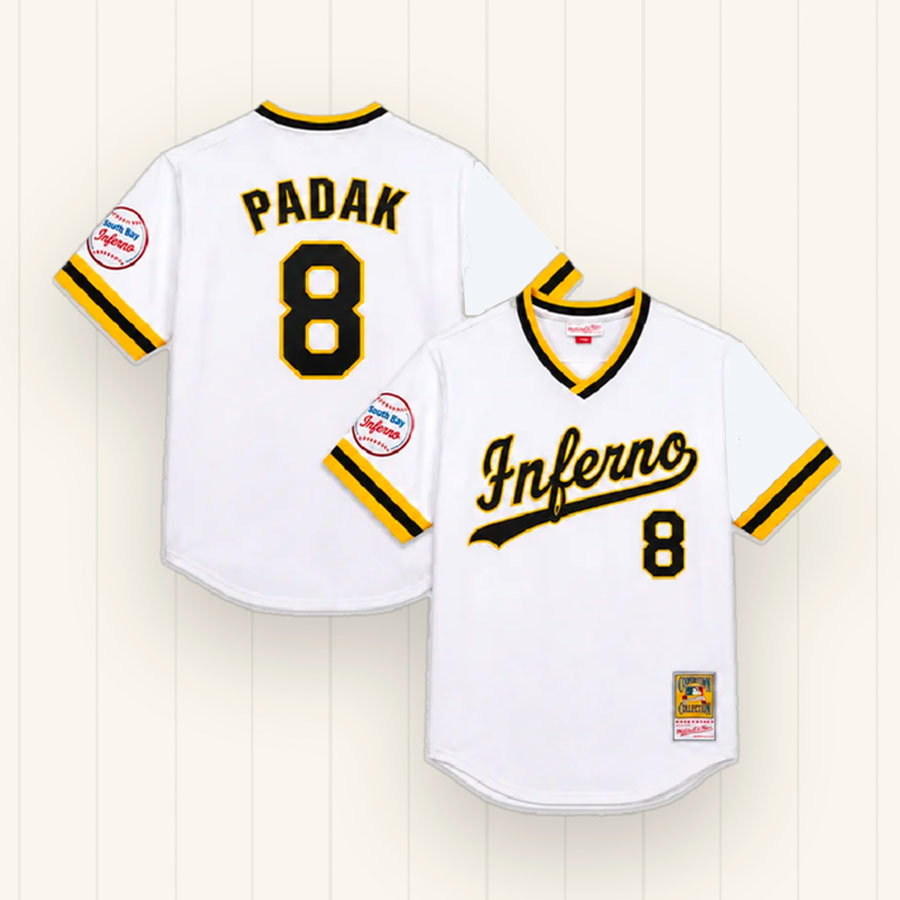
Crisp white with a black-and-gold striped V-neck and cuffs, the pullover home the Padres wore through Dave Winfield's prime. Chain-stitch script with a twill No. 8 under the tail.

Inspired by San Diego Padres brown road, 1970s
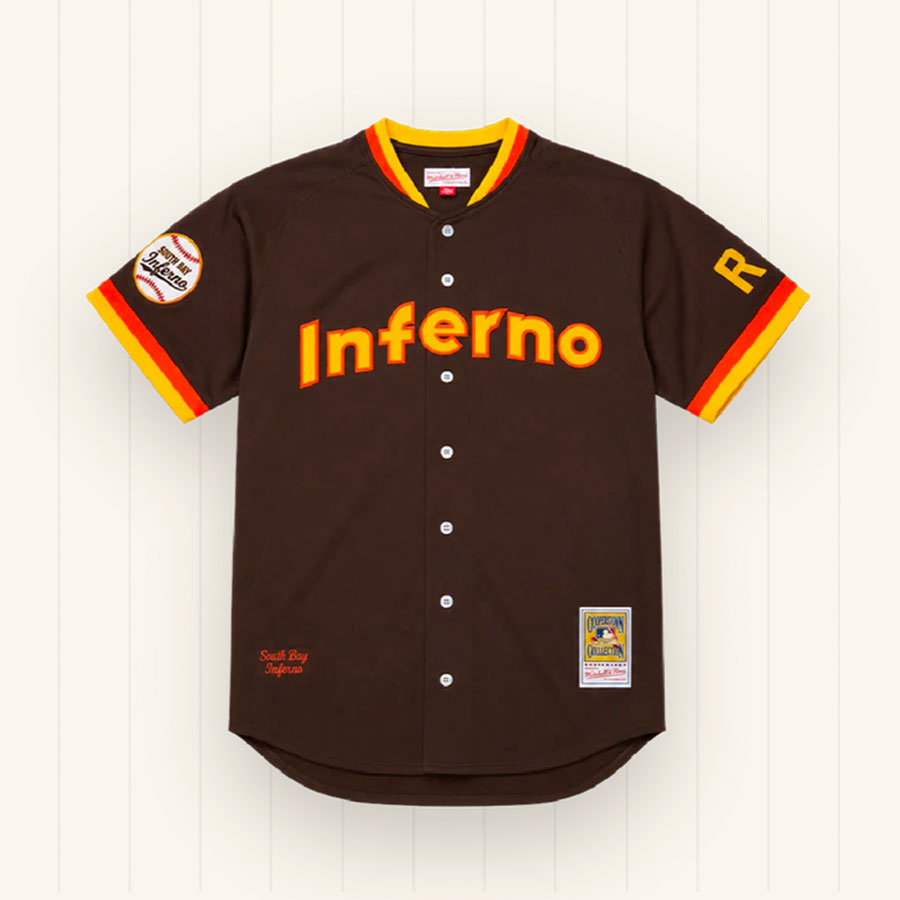
Deep chocolate body with gold-and-orange collar and sleeve bands — the brown road jersey San Diego wore when almost no one else in the majors would touch the color.
Breathable mesh, racing stripes, and V-neck pullovers, balanced against buttoned throwbacks. The decade of the batting-practice jersey — and some of the sharpest trim work ever stitched onto a uniform.

Inspired by San Francisco Giants home, 1983–1993
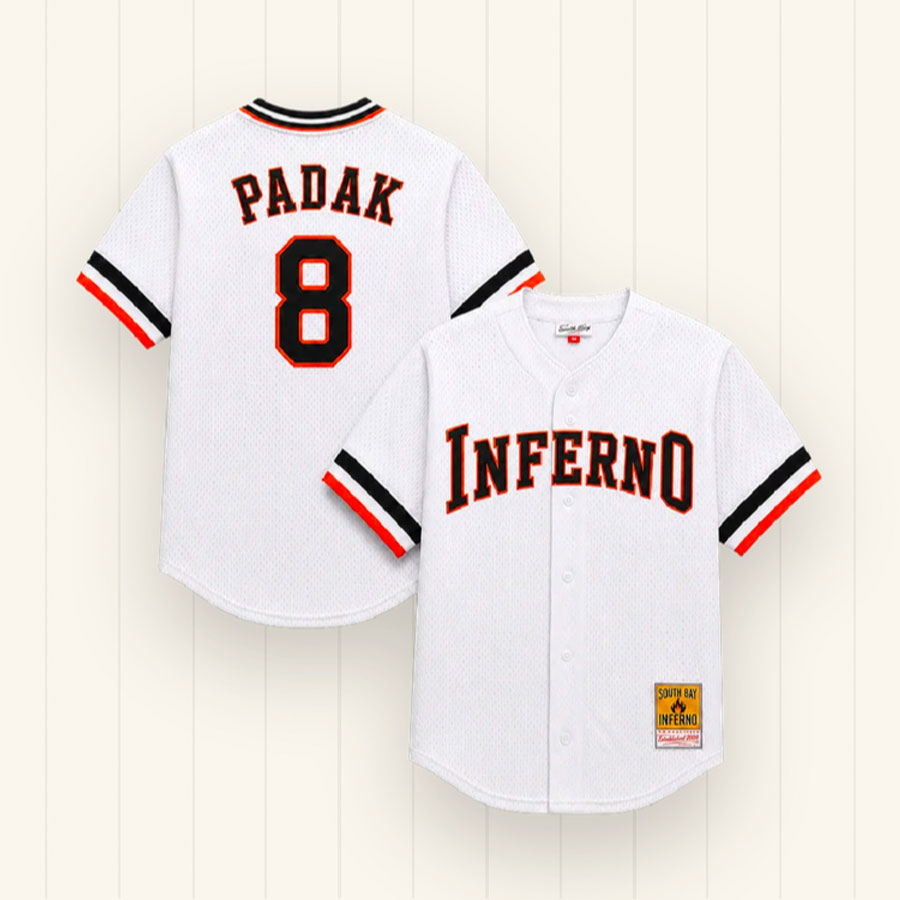
Full-button white with black-and-orange banded sleeves and a heavyweight arched block wordmark — the slab-serif look the Giants ran through the '89 pennant. The definitive home build.

Inspired by New York Mets home, 1983–1990
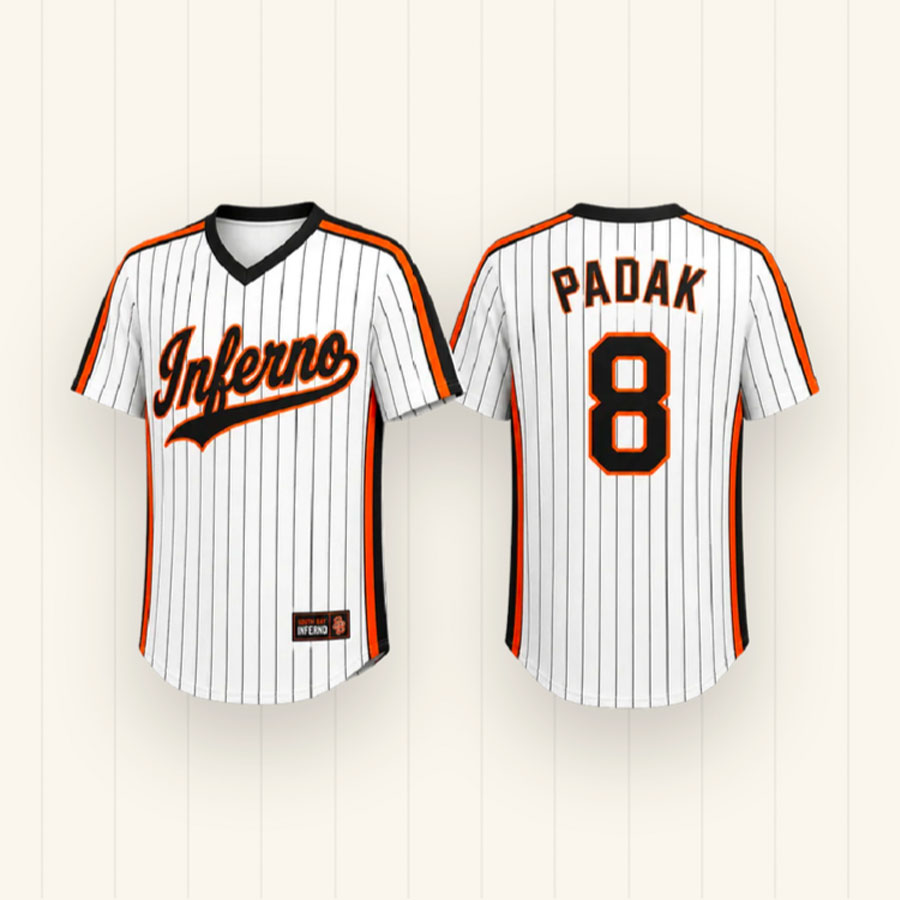
White pinstripe with bold orange-blue-orange racing stripes over each shoulder — the pullover the Mets wore through their 1986 title. Underlined tail script up front, twill No. 8 on the back.

Inspired by Baltimore Orioles orange alternate, 1980s
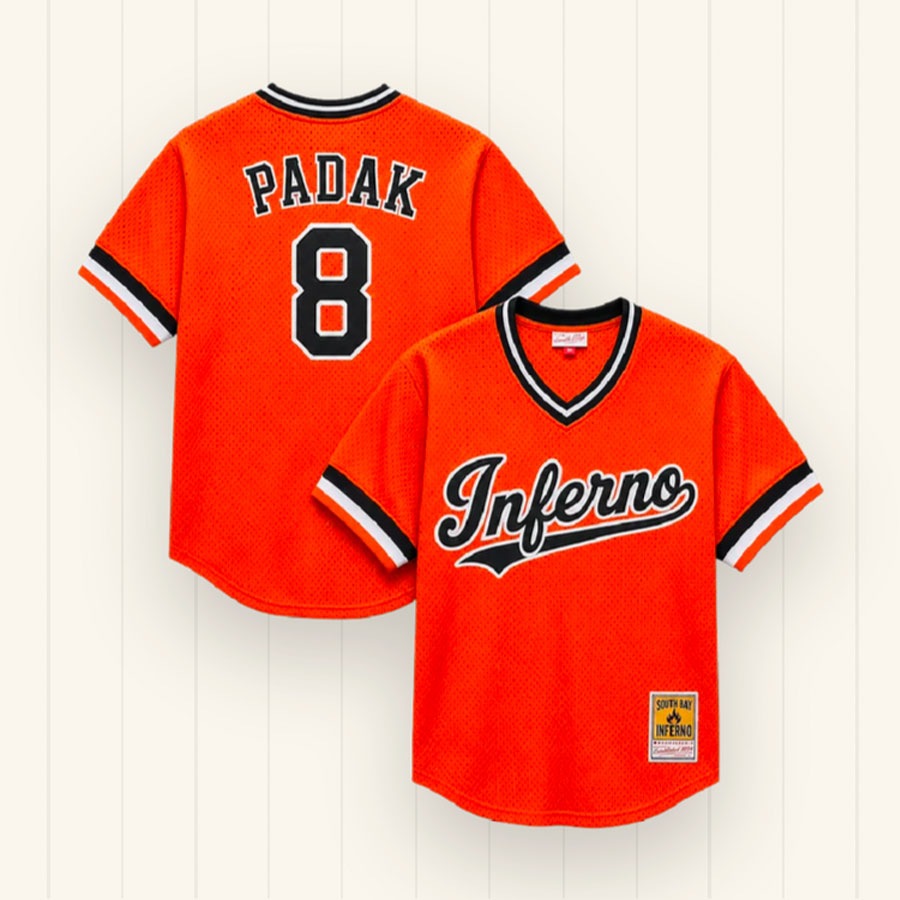
Blaze-orange mesh with a black-and-white striped V-neck, drawn from the orange alternate Baltimore kept in rotation through the '80s. Block name and number in double-outline tackle twill.

Inspired by San Diego Padres road, 1985–1990
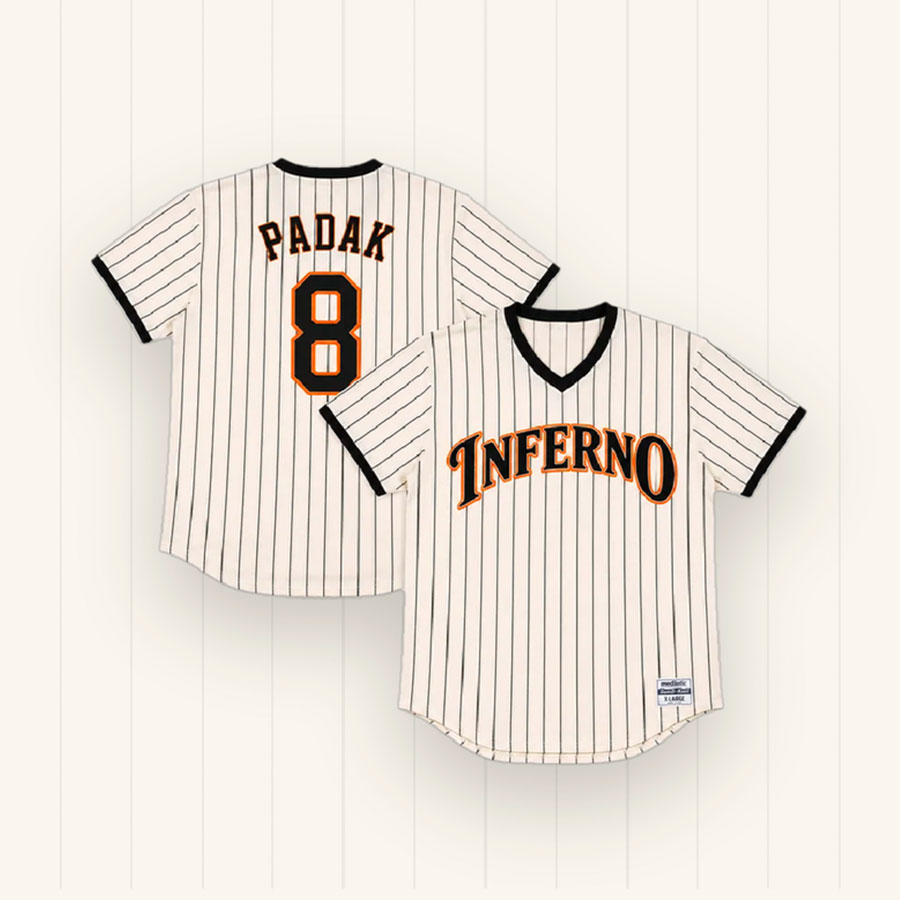
Warm cream with brown pinstripes and a black ringer collar — the pinstriped set San Diego ran in the mid-to-late '80s. Arched wordmark in twill with a keyline outline.

Inspired by Detroit Tigers road grays, late 1970s–1980s
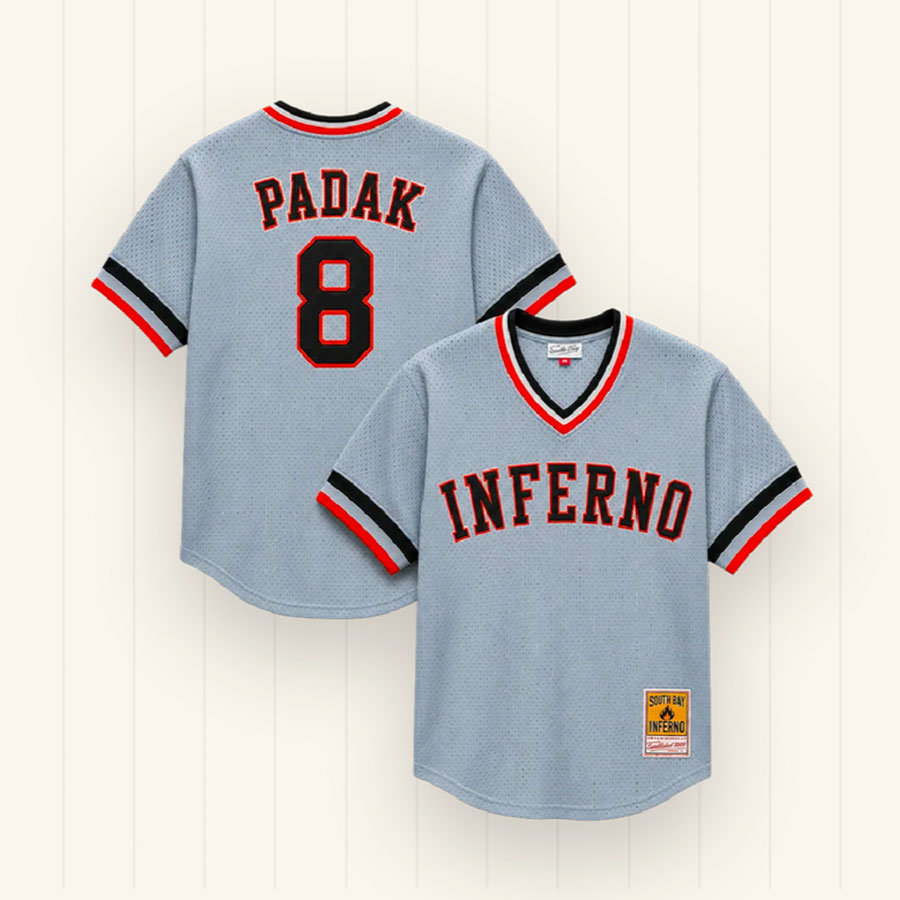
Classic steel road gray with a tri-color V-neck, cut from the arched-block road look Detroit wore through the era. Heavyweight layered twill, jock tag at the hem.

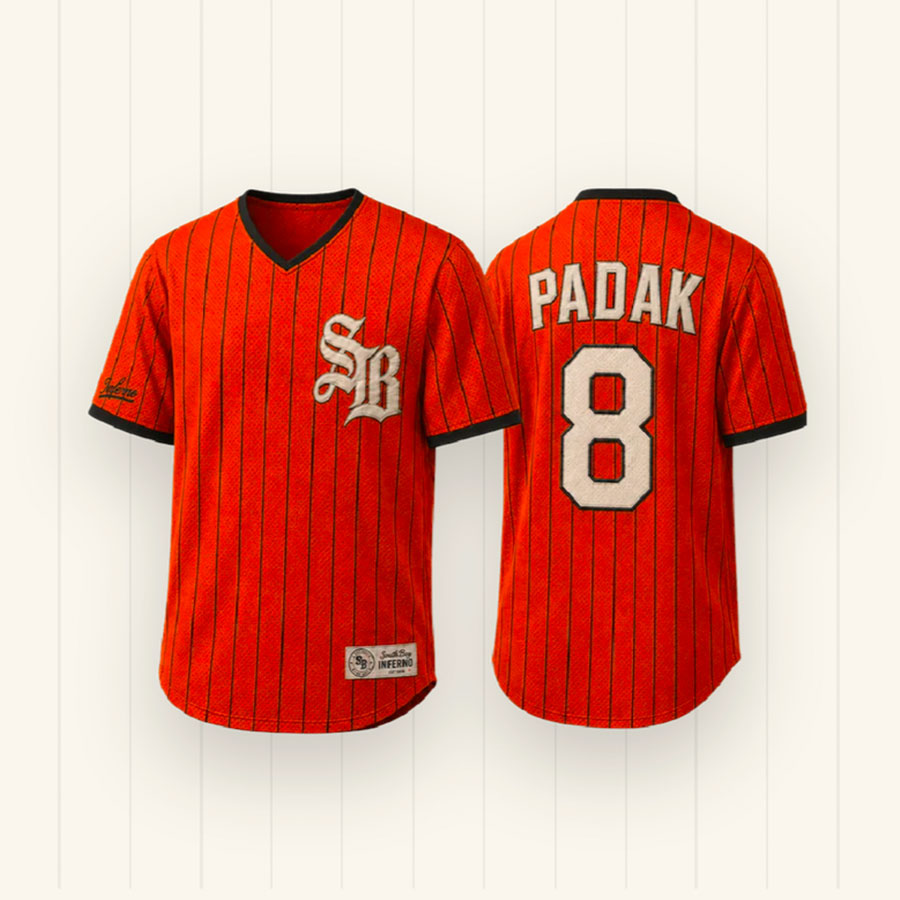
Inspired by Detroit Tigers Old-English heritage (est. 1905)
A pinstripe pullover carrying the Old-English monogram Detroit has worn since 1905 and the home pinstripes they ran on and off from 1912. Felt crest, cream felt numbers, embroidered sleeve script.
Inspired by Detroit Tigers Old-English heritage (est. 1905)
The Old-English look as a full-button jersey. Same washed pinstripe body and felt crest, with a woven club tag stitched at the hem.
Buttons and belted pants return. Baltimore's shift to the ornithological bird brought a decade of clean scripts, sharp piping, and the black Friday-night alternate that defined the look.
Inspired by Baltimore Orioles home, 1989–1994
Clean white full-button with orange piping — the buttoned, belted look Baltimore returned to in 1989 alongside the new bird. Underlined tail script in twill with a black keyline.
Inspired by Baltimore Orioles black alternate, debut 1993
Jet-black button-down with orange tail script, drawn from the black alternate Baltimore promoted from batting practice to a Friday-night staple in 1993. Orange soutache at the collar and cuffs.
Heritage Collection, Volume 1. All designs original to the club and offered for custom team orders. Historical references are noted as design inspiration only; South Bay Inferno is not affiliated with any Major League club.
We build heritage programs, alternates, and full kits for any club — first stitch to delivery.
Start a Program